
Letting Go of Food Fears: Supporting Kids with Selective Eating
I want to address something that keeps coming up with well-meaning parents of children with selective eating due to sensory differences, pediatric feeding disorder, or ARFID. They fear that their children are consuming primarily “junk” and that if they provide preferred foods, their child will become unhealthy or fat. (Our culture’s anti-fat bias is real—and it often shapes these fears more than we realize.)

So often the foods that these children prefer appear to be less healthy, less nutrient dense, more processed, and rich in carbohydrates and sometimes sugar. Many will accept snacks such as goldfish, meals such as chicken strips, waffles, or pancakes, drinks such as juice and chocolate milk. Less comfort is seen with fresh whole foods, or home-cooked complex meals.
It is understandably difficult for parents to understand how a dietitian would recommend the exact foods that other medical professionals have warned them to limit. In this blog I am going to attempt to explain the rationale behind these recommendations.
It might help to first look at what a typical ten-year old child needs in terms of macronutrient distribution. Unlike the popular thought that they need more protein for growth, the main source of energy really needs to come from carbohydrates. More than 50% of their needs in fact. The brain runs primarily on glucose, which comes from carbohydrates. In growing children, the brain uses a large amount of energy each day—not just for thinking and learning, but also for regulating mood, attention, and overall development.
Carbohydrates also:
Fuel growth and physical activity
Spare protein for growth (instead of being used for energy)
Support stable energy levels and concentration
Help regulate metabolism and prevent the body from going into energy conservation mode
When carbohydrate intake is too low, the body has to compensate by breaking down protein or using fat for energy, which is less efficient and not ideal during periods of growth.
For most children, this is why general nutrition guidance recommends that about 45–65% of total calories come from carbohydrates—with many kids naturally landing around half or more.
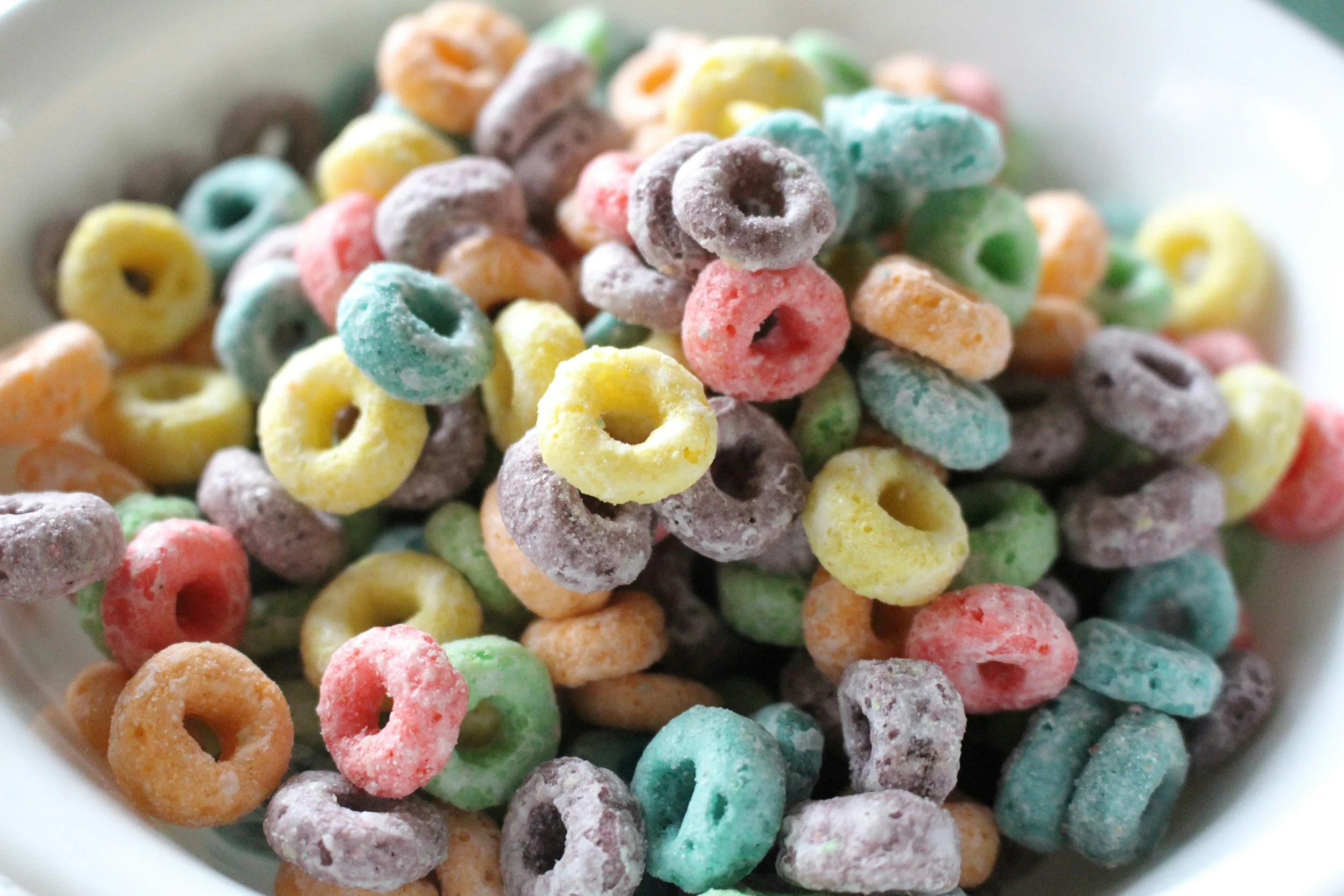
Some foods that are often labeled as ‘just sugar’—like certain cereals, breads, or snack foods—can contribute meaningful nutrition. Many are made with enriched or fortified flour, providing nutrients like iron and B vitamins (including folate, thiamin, riboflavin, and niacin). For children with limited diets, these foods can play an important role in helping fill nutrient gaps while we continue working toward more variety.
Also worth mentioning is that eating sugar does not cause diabetes in children. Type 1 diabetes is not diet-related, and Type 2 develops from a complex mix of factors—not from individual foods. For kids with selective eating, limiting these foods can backfire by decreasing intake and increasing stress around eating.
Carbohydrates aren’t “extra” or “empty”—they’re essential fuel for a child’s growing brain and body.
In terms of protein, the most popular macronutrient of the day (you can even find it added to water!),parents are often surprised to learn that most children only need about 0.9–1.0 grams of protein per kilogram of body weight per day. For a 10-year-old, this often comes out to roughly 30-45 grams per day, which can be met with typical intake—even in a limited diet like the one below. Foods like milk, cheese (pizza), peanut butter, and even grains contribute to meeting protein needs over the course of the day.
What a “Limited” Day of Eating Can Still Provide
Breakfast
Waffles or pancakes → carbohydrates (energy), enriched flour provides iron + B vitamins
Chocolate milk → protein, calcium, vitamin D, potassium, plus carbohydrates for energy
Lunch (Snack Plate Style)
Goldfish crackers → carbohydrates, some protein, enriched grains = iron + B vitamins
Fruit snacks → quick carbohydrates (energy)
Bread with butter or peanut butter
Bread → carbohydrates, iron + B vitamins
Butter → fats for energy
Peanut butter → protein, healthy fats, vitamin E, magnesium
Apple juice → carbohydrates for quick energy, vitamin C, hydration
After School Snack
Lay’s potato chips → carbohydrates, fats (energy), sodium (electrolyte)
Chocolate milk → protein, calcium, vitamin D, potassium, plus carbohydrates for energy
Dinner
Pizza →
Crust → carbohydrates (energy)
Cheese → protein, calcium, fat
Sauce → small amounts of vitamin C + lycopene
Dessert
Ice cream → calories for growth, calcium, fat, some protein
Even with selective eating, this day provides meaningful nourishment. It includes adequate carbohydrates to support brain function and energy needs, protein across multiple meals, and fats that are essential for growth and satiety. It also offers key micronutrients such as calcium, iron, B vitamins, and some vitamin C, along with fluids and hydration from both beverages and foods like milk and juice.
Understanding Growth: Looking Beyond the Numbers
When we’re thinking about a child’s nutrition, one of the most important indicators is growth over time, not just a single weight or percentile. Children naturally grow along their own trajectory on a growth chart. Some track at higher percentiles, some lower—but what matters most is that they are following their own curve consistently.
When do we get concerned?
We start to look more closely when a child drops across two or more percentiles, shows slowing weight gain or growth over time, or is no longer tracking along their established pattern. This can be a sign that energy intake is not keeping up with their body’s needs.
Another helpful tool is mid-parental height, which gives an estimate of a child’s genetic growth potential based on parent heights.
For boys:
(Mom’s height + Dad’s height + 5 inches) ÷ 2For girls:
(Mom’s height + Dad’s height − 5 inches) ÷ 2
This estimate isn’t exact, but it helps us understand whether a child’s current growth is aligned with their expected trajectory.
Why this matters in selective eating
If a child is not getting enough total energy—regardless of where those calories are coming from—their body may begin to:
slow growth
conserve energy
prioritize basic functions over growth and development
This is why, especially in children with selective eating, getting enough total intake matters first.
When we focus too heavily on what a child is eating without ensuring they are eating enough, we risk unintentionally impacting their growth.
When children with selective eating are pressured to eat “healthier” foods or have their preferred foods limited, it often leads to reduced overall intake. This is not a behavioral issue—it reflects underlying sensory differences, anxiety, and regulation challenges.
In children with selective eating, supporting the foods they feel safe with is not ‘giving in’—it is protecting their nutrition, their growth, and their long-term relationship with food.
References:
Klein, M. D. (2019). Anxious eaters, anxious mealtimes: Practical and compassionate strategies for mealtime peace. Archway Publishing.
Goodall, E., & Brownlow, C. (2022). Interoception and regulation: Understanding internal sensory processing. Routledge.
Mahler, K. (2016). The interoception curriculum: A step-by-step guide to developing mindful self-regulation. AAPC Publishing.
Mahler, K., Rothschild, C., & Alma, J. (n.d.). My interoception workbook: A guide for adolescents, teens, & adults.
Mahler, K. (n.d.). Noticing my body signals: A science lab adventure.
Rowell, K. (2012). Love me, feed me: The foster and adoptive parent’s guide to responsive feeding. CreateSpace Independent Publishing Platform.
Rowell, K., & McGlothlin, J. (2015). Helping your child with extreme picky eating. New Harbinger Publications.
Rowell, K., & McGlothlin, J. (2019). Helping your child when mealtimes are hard: Loving support for anxious eating, weight and nutrition worries, and everything in between. New Harbinger Publications.
Resources:
Feeding Matters: https://www.feedingmatters.org/
Marsha Dunn Klein OTR/L: https://getpermissioninstitute.com/
Melanie Potock SLP: https://mymunchbug.com/
Your Kids Table-Building skills, regulation and connection with OT
AEIOU: An Integrated Approach to
Pediatric Feeding
https://www.foodsmartkids.com/aeiou-course
Kelly Mahler, MS, OTR/L (Interoception)
https://www.kelly-mahler.com/what-is-interoception/
Feeding Littles Lunches
Linge, A., & Linge, M. (2020). Feeding littles lunches: 75+ no-stress lunch ideas for everyone. Da Capo Lifelong Books.